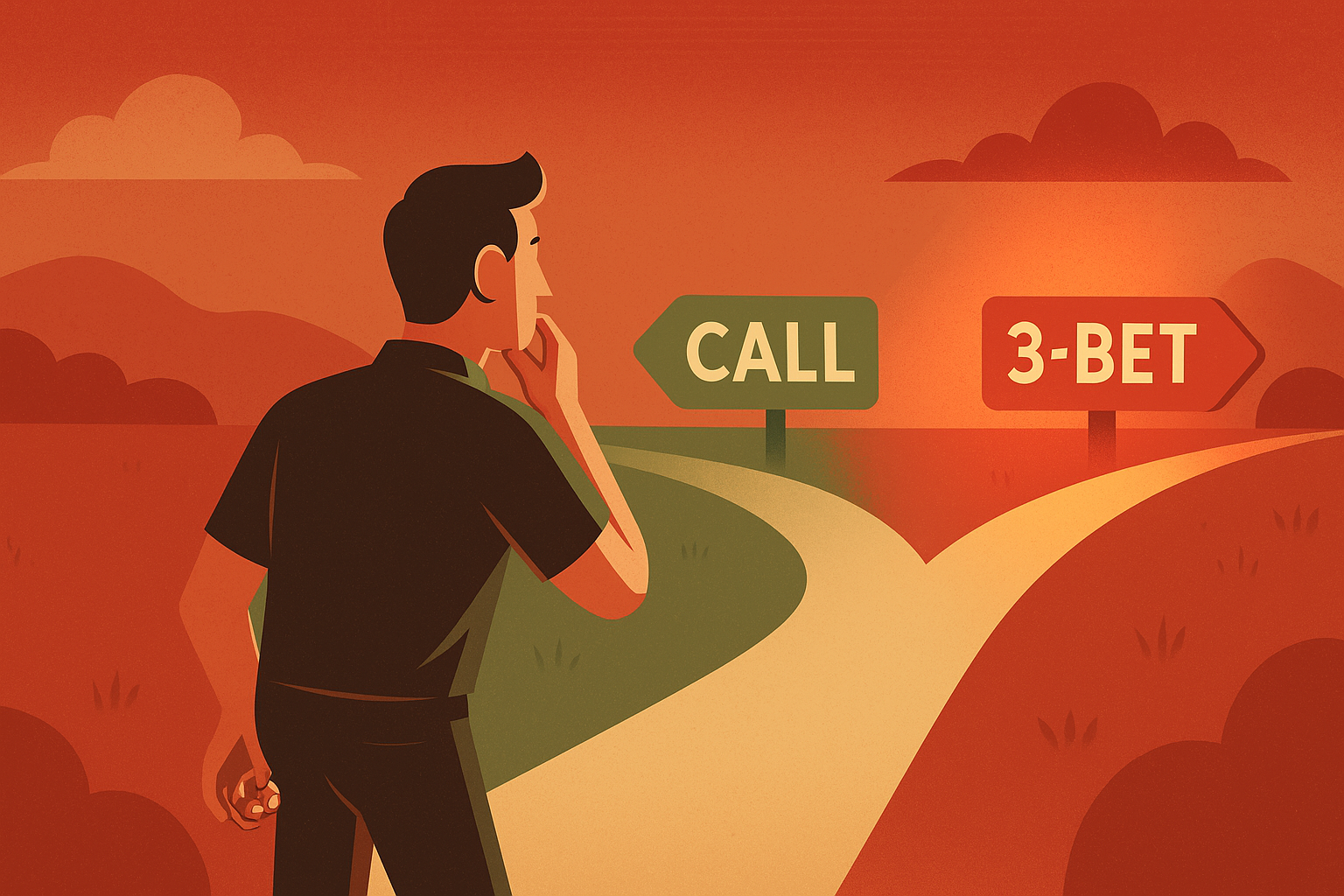
Whether to Call, Bet, or 3-Bet, and When to Do It
1. Why Limping is Generally a Bad Idea
Limping, or just calling the big blind without raising, is often a hallmark of beginner play. It might seem harmless, but it usually leads to more problems than benefits. Here's why:
- Lack of Strength: Most players tend to limp with weak or medium-strength hands. By contrast, their raises often indicate stronger hands. So, if you limp, you signal a weak holding to the table, making it easier for opponents to read your hand strength and exploit you.
- Lack of Aggression: When you limp, you miss the chance to take control of the hand. By raising instead of limping, you can win the pot immediately or build a bigger pot when you have a strong hand.
- Exploitation Risks: You might think you're clever by limping strong hands like pocket aces or kings, hoping to trap someone into raising after you. However, most experienced players are aware that limp-raises generally represent a monster hand, making them wary of calling.
While some players use limping strategically in certain situations, it's generally a tactic reserved for either advanced players who know how to balance their ranges or beginners who are too passive. To build a strong foundation, aim to either raise or fold instead of limping.
2. How Much to Bet When Opening
When opening the betting in a hand (where no one has raised yet), the question often arises: "How much should I raise?"
- General Sizing Recommendations: A good starting point online is to raise between 2.25 and 2.5 times the big blind. This size allows you to play more hands without losing much expected value (EV), while also forcing your opponents to call more frequently and make more 3-bets. For the button position, 2.5x is ideal. If you're on the small blind, aim for about 3x since you're playing out of position post-flop.
- Adding Against Limpers: When someone limps before you, your raise size should be adjusted. Add the value of the limper's call (1 big blind) to your standard raise, meaning you should raise to around 3.5 big blinds. If you're out of position, like in the small blind, raise between 4 and 4.5 big blinds.
3. To Call or 3-Bet an Open Raise
When someone else has already made an open raise, you'll need to decide whether to call or 3-bet (re-raise).
- General Rule: If you're at low stakes with relatively high rake, it's usually best to either 3-bet or fold unless you're in the big blind. By following this strategy, you prevent yourself from being exploited by subsequent raises.
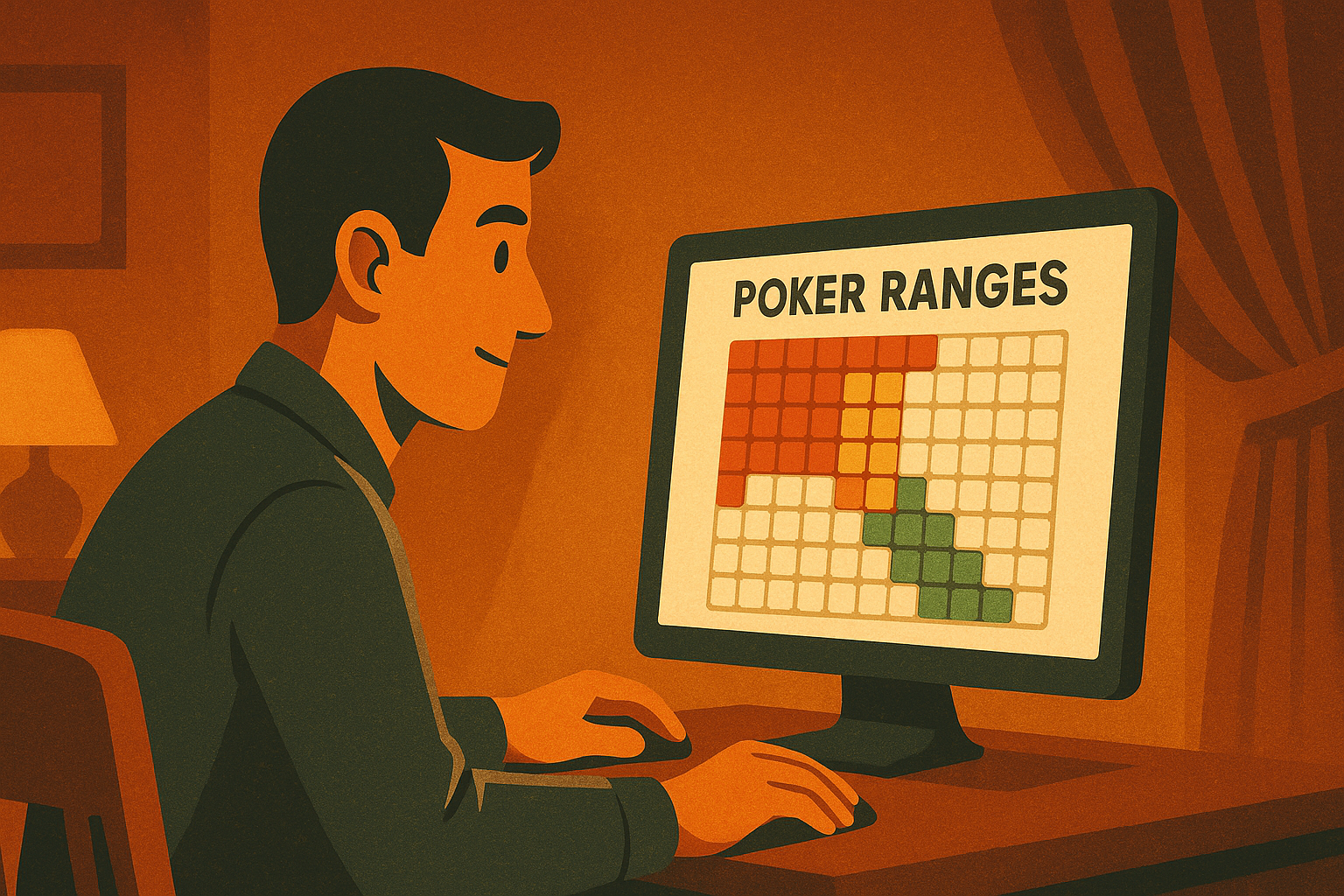
- Balanced Ranges: Your 3-bet range should include about 10% of your best hands, but the exact percentage varies based on your position and your opponents' tendencies.
- The Big Blind Exception: The big blind is the last position to act pre-flop. Since you've already invested one big blind, you're incentivized to call more frequently to defend your blind. You don't have to worry about being pushed out of the pot by someone behind you with a 3-bet. Additionally, calling here is about pot odds, a concept that's crucial but more intermediate, which we'll cover later.
4. Determining 3-Bet Sizing in Poker
When it comes to deciding how much to 3-bet after an opponent has opened, many variables can influence your decision, such as your position, the tendencies of the player you're 3-betting, and other situational factors. However, as a beginner, it's helpful to start with a basic guideline to streamline your decision-making process.
In Position 3-Bet Sizing
When you are in position, such as being on the button, and facing an open raise, a standard size for a 3-bet is roughly 3.5 times the original raise. For example, if an opponent raises to 2.5x the big blind from under the gun, you should consider making your 3-bet around 8.25 big blinds. The rationale behind this sizing is influenced by solver recommendations, which suggest that this size strikes a balance between leveraging your hand strength and forcing a significant portion of your opponent's range to fold. This size is substantial enough to discourage calls with marginal hands, yet not so large as to commit you unnecessarily when your opponent plays back aggressively.
3-Betting from the Blinds
The dynamics change slightly when you are 3-betting from the blinds. Here, you'll generally want to use a larger sizing due to the positional disadvantage you'll face throughout the hand. A good rule of thumb from the blinds is to make your 3-bet between 10 to 12 big blinds. For instance, if an opponent opens to 2.5x the big blind and you're in the small blind with a strong hand, consider a 3-bet of around 11.5 big blinds.
High stakes professionals often vary their sizes even more aggressively from the blinds, sometimes going up to 14 big blinds to maximize fold equity. The larger sizing compensates for the positional disadvantage by putting more pressure on your opponents pre-flop, making it costly for them to call with weaker hands that might otherwise be playable. This approach helps you narrow down the field and increase the likelihood of either taking down the pot pre-flop or playing a heads-up pot with a range advantage.
Strategic Considerations
Using these sizings isn't just about following a formula; it's about understanding the strategic advantage they provide. By making a larger 3-bet, especially from the blinds, you force your opponent into difficult decisions with many hands that could otherwise see a cheap flop. If they do decide to call your 3-bet with a wide range, they will often enter a post-flop situation with a weaker range than yours, giving you the upper hand.
Remember, the goal of adjusting your 3-bet sizing is not only to balance your ranges but also to manipulate the pot size and stack-to-pot ratio in ways that benefit your hand and strategic position. As you gain more experience and understanding of your opponents' tendencies, you'll be able to refine these sizings to better exploit specific players and situations.
5. Summary
To summarize, here's a checklist for whether to call, bet, or 3-bet:
- Avoid Limping: Develop a strategy that excludes limping. Either raise or fold, depending on the situation.
- Open Raise Size: Open to 2.25-2.5x the big blind generally, but 3x from the small blind.
- Punish Limpers: Raise to around 3.5x against limpers, more if you're out of position.
- 3-Bet or Fold: Against an open raise, 3-bet or fold, except when you're in the big blind where calling is often fine.
Understanding these basic strategies will form a solid foundation for your poker journey. As you develop your game, you'll start to see how these principles interconnect and the reasoning behind them will become clearer. Stay patient, and the picture will unfold with experience!
Ready to Master Betting Strategy?
Learn optimal bet sizing and decision-making with our comprehensive training platform.
Join Beta Now