Thinking in Ranges – A Strategic Approach to Poker
Understanding Ranges in Poker
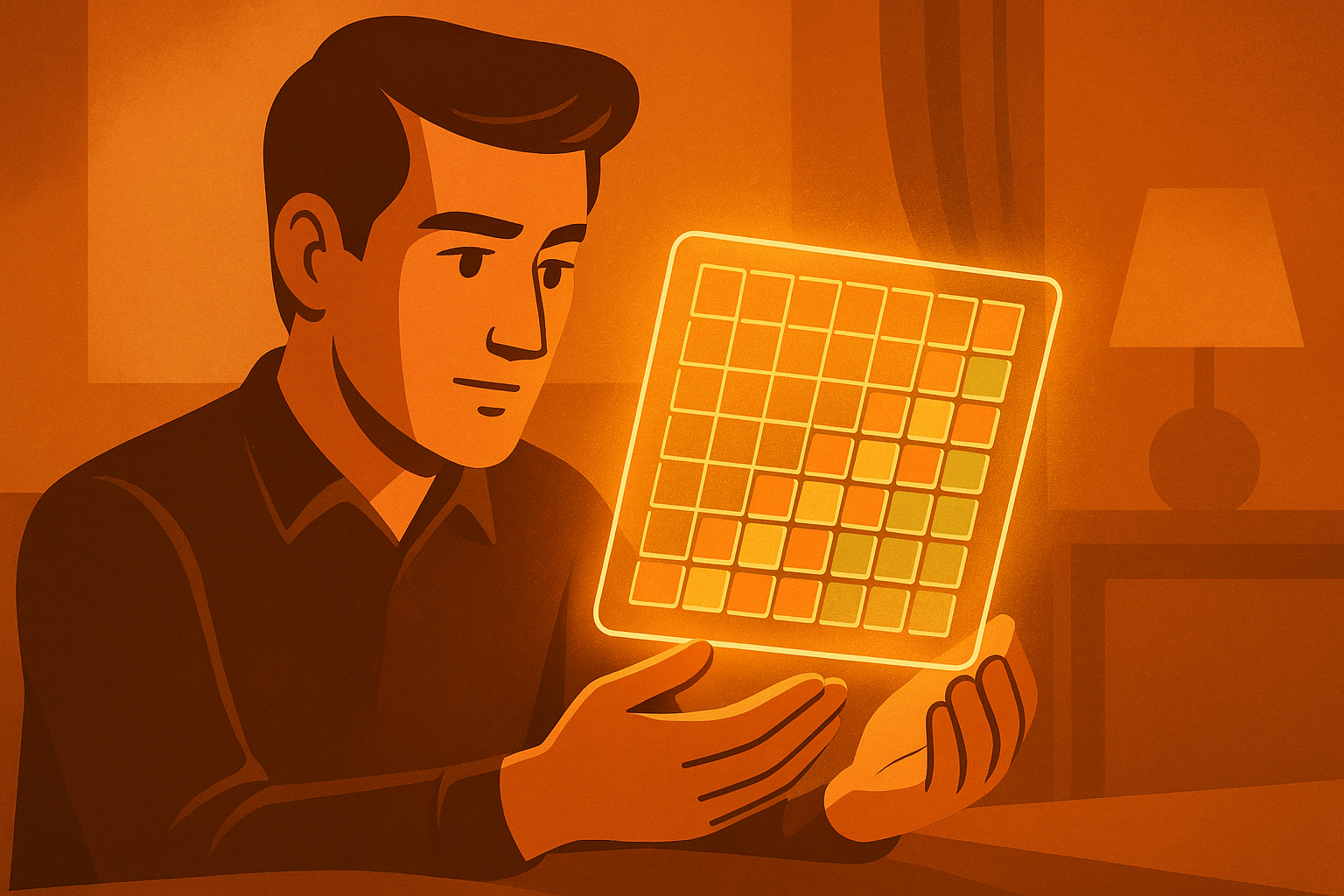
One of the key transitions a beginner poker player can make is shifting from thinking about specific hands to thinking about ranges. But what exactly is a range in poker? Simply put, a range is the entire spectrum of hands you or your opponents might hold in a given situation. This concept allows players to make more informed decisions by considering all possible hands instead of focusing on one particular hand.
Why Think in Ranges?
Thinking in ranges helps you understand not just what you or your opponent have, but what you and your opponents could have. This approach broadens your strategic options and improves your ability to predict opponents' actions. The old school way of thinking about poker was putting your opponent on a hand. This is exactly what made Daniel Negreanu famous - almost magically being able to predict his opponents exact hole cards. But if you think about it then unless he had some kind of alien hardware it's almost impossible to put your opponent on correct hole cards consistently. What actually happened there most of the times is that his opponents' ranges got so narrow that he was able to guess the two hole cards that the opponent had. Of course he was often wrong but this is not what the highlight reel on YouTube shows you.
Poker evolved however from putting players on concrete hole cards to putting opponents on a range of hole cards that they could possibly have. That way you do not have to be concerned about guessing the correct hole cards but instead you can focus your strategy on playing against their possible range of hole cards. A bit complicated? Let's simplify it with a simple example.
An Example: Playing Against a 4-Bettor
Let's imagine a scenario: You're under the gun (the first player to act pre-flop) and open-raise with your hand. A middle position player re-raises your bet. The cutoff folds, but the player on the button decides to re-raise again, putting pressure on the table. The blinds fold, and the action comes back to you. In this situation, you have pocket Jacks (JJ).
What can we infer about the range of hole cards that the 4-bettor on the button might have?
The traditional way of thinking would lead us to guess the exact two hole cards of the button player. If we put them on pocket Aces (AA), then we would have to fold our pocket Jacks as Aces are favored to win. On the other hand, if we put them on Ace-King offsuit (AKo), then we would probably have to call as pocket Jacks statistically beat AKo more than 50% of the time.
However, this method of guessing specific hands can lead to inconsistent and often incorrect decisions.
Instead, we should consider the range of hands that the 4-bettor could have. This range might include pocket Aces (AA), pocket Kings (KK), pocket Queens (QQ), Ace-King (AK), and perhaps Ace-Queen (AQ). This approach allows us to make a more educated decision based on the range of possible hands the button player might hold, rather than trying to pin them on one exact hand.
By thinking in terms of ranges, we can more accurately assess our position in the game and decide how to play our pocket Jacks. The specific action we take at this moment isn't as important as the process of considering the range of possible hands our opponent might hold.
An Example: Setting Your Range on the Button
Imagine you're seated on the button—the best position at the table, as you act last in every betting round post-flop. All the action has folded to you, so it's your opportunity to decide how to proceed with a wide range of potential starting hands. Here, your range can be quite broad because of your positional advantage.
Defining Your Range
On the button, your range should include:
- High cards: Such as any Ace-high combination, King-high combinations like KQ, KJ, and more.
- Pairs: All pairs from 22 (two-twos) up to AA (ace-aces).
- Suited connectors: Such as 76s, 98s, etc., which can make flushes and straights.
- Suited one-gappers and two-gappers: Like J9s or T8s, these can also form strong hands but are slightly riskier.
- Select offsuit connectors: Particularly those involving face cards, like QJ or JT.
Your specific range can expand or contract based on how aggressive or conservative you want to be. The key is to balance the potential strength of your hand against the likelihood of controlling the hand post-flop due to your advantageous position.
Applying the Range Concept
- Pre-flop: If you're holding a hand that falls within your defined range on the button, you would typically choose to play that hand by either calling an existing bet or making a raise.
- Post-flop: The range with which you entered the pre-flop phase will influence your decisions post-flop. For example, if the flop comes and it's favorable to your range (say, you have suited connectors and the flop brings two more cards of your suit), you continue betting or raising. If the flop is unfavorable (say, you have low suited connectors but the flop brings high unsuited cards), you might choose to check or fold.
Remembering Your Range
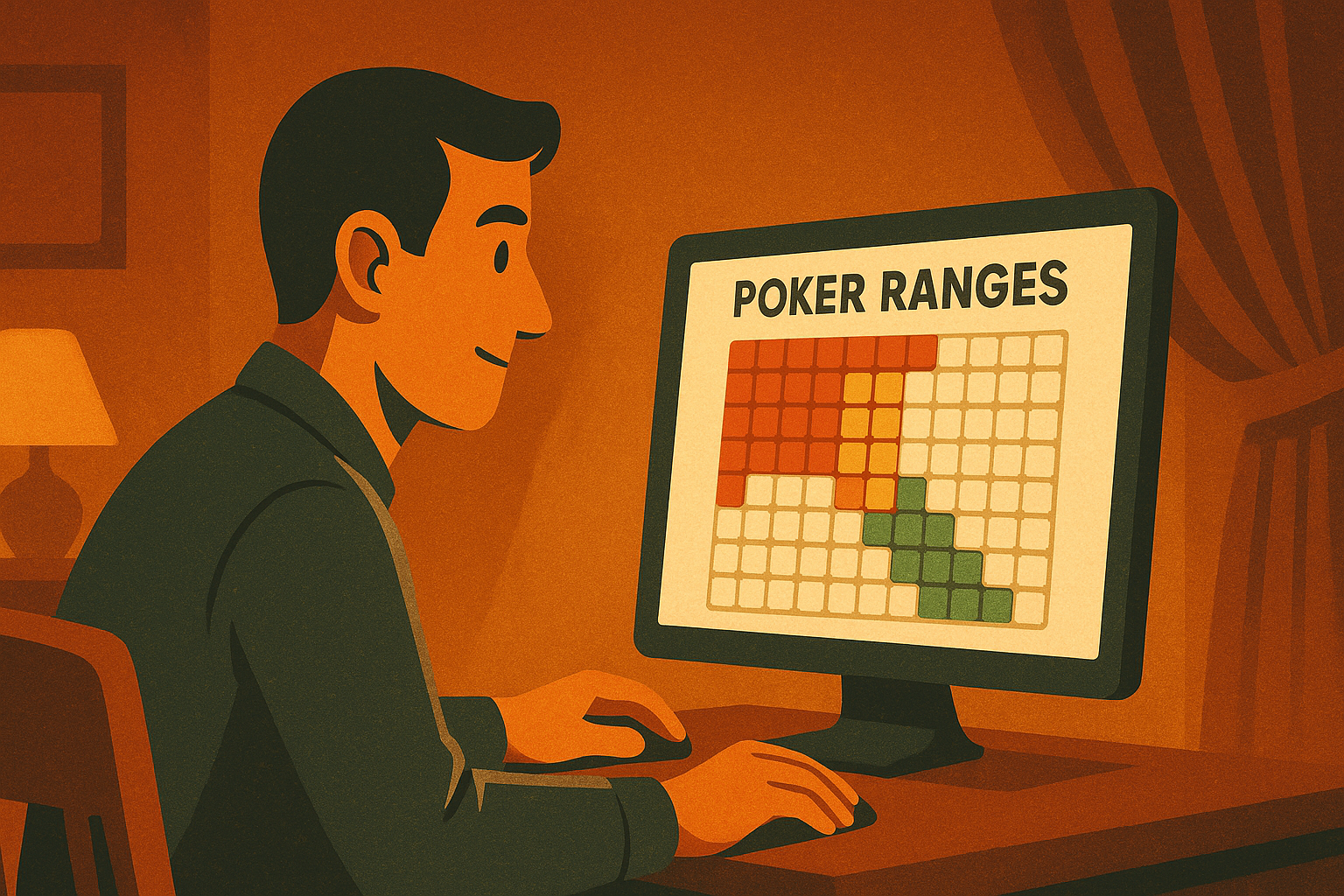
For beginners, memorizing your range in various situations can seem daunting. A good practice is to start by learning standard opening ranges from each position, then gradually build your knowledge to include other preflop and postflop scenarios. RiverNuts provides all the tools and charts that can help visualize and remember these ranges.
Ranges Evolve with the Hand
It's crucial to understand that ranges are dynamic, not static. As the hand progresses through the flop, turn, and river, the range you assign yourself and your opponents will change based on the betting actions and the community cards that are dealt. Adaptability is key.
Conclusion
Thinking in ranges is a powerful tool in your poker strategy arsenal. It allows for a more calculated approach to the game, helping you make decisions based on a spectrum of possibilities rather than getting fixated on one particular hand. As you become more comfortable with the concept of ranges, your ability to read situations and make strategic bets will greatly improve, enhancing not just your gameplay but also your overall enjoyment of the game.
Ready to Master Range-Based Thinking?
Learn how to think in ranges and elevate your poker strategy with our comprehensive training platform.
Join Beta Now