Cold Calling vs. 3-Betting: Choosing the Right Weapon
When someone opens the pot before you, you face one of poker's simplest-looking — yet most misunderstood — decisions: Should you cold call or 3-bet?
Both options can win money, both can lose money, and both depend on far more than the two cards in your hand. The truth is, your choice says as much about your position, your opponents, and the table dynamics as it does about your holdings.
The Nature of the Cold Call
A cold call means calling a raise when you haven't yet put chips in the pot — for example, the cutoff opens to 2.5x, and you call on the button.
Cold calling often gets a bad reputation among aggressive players, who prefer to either 3-bet or fold. And for good reason — in many spots, calling just lets the blinds squeeze you out or forces you into tough, multiway pots.
But cold calling isn't always a leak. In fact, when used selectively, it can be a powerful tool for balancing your range and keeping pots manageable with playable hands. The key lies in when and where you do it.
Where Cold Calling Makes Sense
As a general rule, the button is the best seat for cold calling. You'll always have position postflop, which means you can realize equity more efficiently and put pressure on others when the flop hits your range.
From the cutoff or middle position, cold calling becomes riskier because there are more players still to act, and any one of them can 3-bet and push you out of the hand. For that reason, calling ranges from these seats should be much tighter — mostly pocket pairs, strong suited connectors, and high-card suited hands that can comfortably continue versus a 3-bet.
As for the small blind? In our opinion, cold calling here makes sense only in very particular circumstances: when the rake is relatively cheap, the open raise size is very small (generally 2x), and the big blind is a rather weak player. Otherwise, you'll be facing a situation where the big blind calls after you, leaving you out of position with a capped range against two players — not an enviable spot.
As a general rule, we recommend choosing a 3-bet-or-fold strategy from the cutoff, middle position, and small blind, and occasionally developing a cold calling range for the button.
However, if you're just starting out, consider developing only 3-bet-or-fold ranges at first. It's a double-edged sword: on one hand, focusing solely on 3-bet-or-fold allows you to study only the spots where you're in position, which are easier to navigate since stack-to-pot ratios are smaller and postflop action is simpler (the out-of-position player generally checks). On the other hand, as a beginner, you do take on some risk of bloating pots and playing for larger stakes before you're fully comfortable.
In short: cold calling thrives when you have position, the open size is small, and the players behind you are passive.
When to Skip the Call and Reach for the 3-Bet
There are many situations where cold calling should disappear from your playbook.
When you're out of position or facing larger open sizes, calling just traps you in low-equity situations. You'll miss most flops and face aggression from an uncapped range without initiative.
Instead, lean toward a 3-bet-or-fold strategy when:
- The rake is high (as in many online environments).
- There are squeeze-happy players behind you who make cold calls unprofitable.
- The opener is a weak player who overcalls and can't lay down dominated hands — perfect for linear 3-betting your strong top-down range.
A linear 3-bet or fold approach simplifies your strategy and forces opponents into tough decisions with inferior hands. When your opponent keeps calling, you want to play bigger pots with the best parts of your range, not middle-of-the-road hands that lose their value in bloated multiway pots.
Building Your Ranges: Polar or Linear?
Not all 3-bets are created equal. The structure of your range depends heavily on your opponent's tendencies.
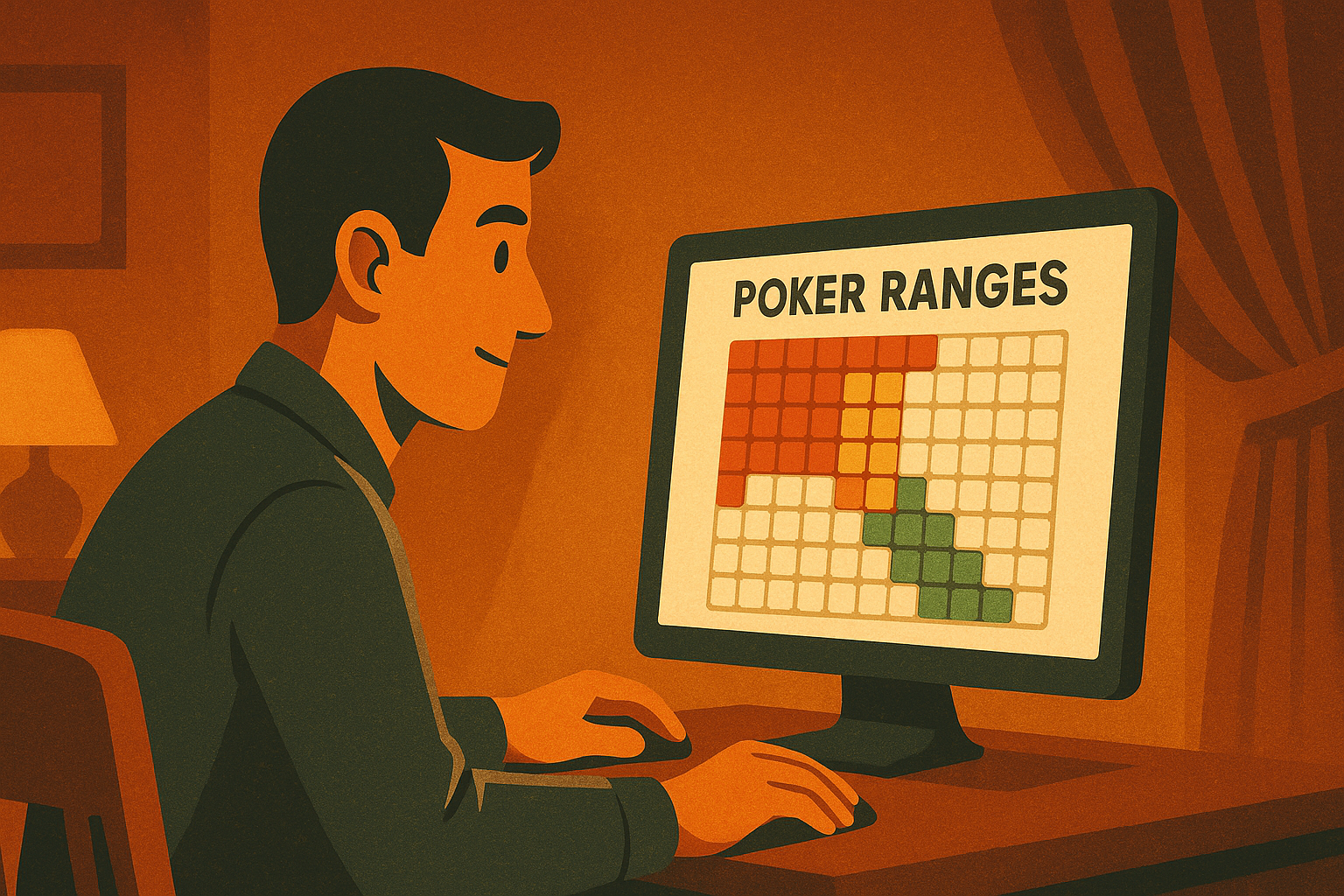
When you face players who call 3-bets too often, you want to 3-bet linearly — that is, with your best hands going straight down the hierarchy. AA, KK, QQ, AK, AQs, KQs, and even AJs or TT become value-heavy 3-bets. These opponents will call too wide, so you profit by simply holding better cards more often.
When you face players who fold too much versus 3-bets, you should instead go polar — mixing your strongest hands with selective bluffs that have good blockers, such as A5s or K9s. The reason is simple: they're folding often, so your bluffs work well, and your premiums still get paid when they occasionally fight back.
However, once you adopt a polar 3-bet strategy, you automatically develop a calling range for your middling hands — the ones that are too strong to bluff but not strong enough to 3-bet for value. Think of suited Broadways, medium pairs, and good suited aces.
To protect this calling range, you should also occasionally flat some of your strongest hands, like AK or QQ, especially in position. Doing so keeps your calls balanced and prevents your 3-bets from being too face-up.
So, whether you play polar or linear, always think of your range as a spectrum — not a set of rigid categories.
Final Thoughts: Know Why You Choose
Deciding between cold calling and 3-betting isn't about what the charts say — it's about understanding your environment.
Cold calling works best when you have position, control, and reasonable odds. 3-betting shines when you want to deny equity, punish leaks, or play bigger pots against weaker ranges.
Neither option is automatically right or wrong. The best players don't just react to their cards — they react to the situation.
So before you act, pause for half a second and ask: Who opened? Who's behind me? And what do I gain by taking control right now?
If you want to understand how position, stack depth, and opponent tendencies truly shape these preflop dynamics, you can see the data for yourself. Head over to RiverNuts.io, where you'll find real MDA-backed insights on 3-bet frequencies, cold-calling ranges, and positional edges across various stakes — helping you turn theory into clear, profitable action.
Ready to Master Preflop Aggression?
Get access to real player data, 3-bet frequencies, and position-based ranges to help you make the right decision every time. Join RiverNuts and turn preflop theory into profit.
Join Beta Now