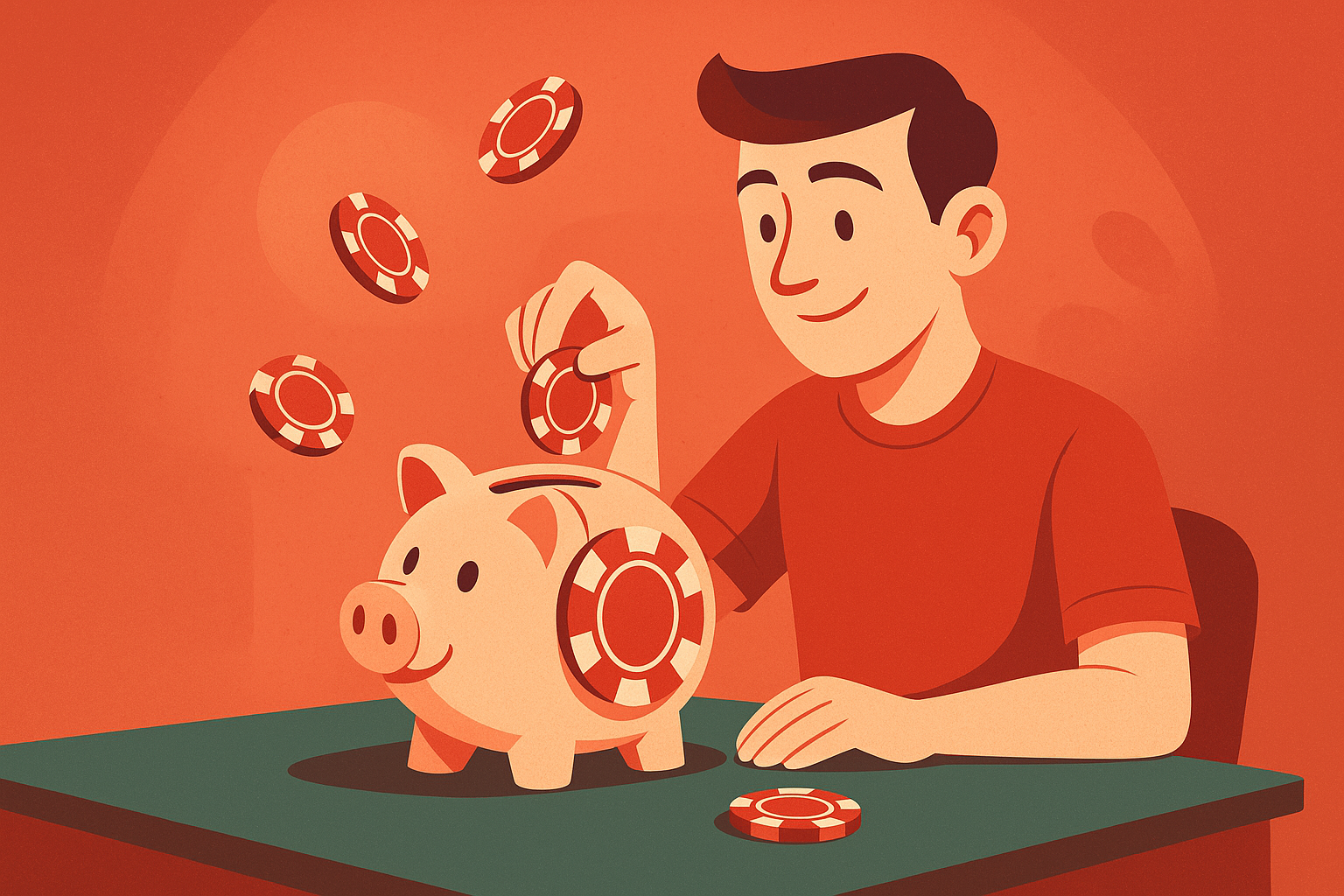
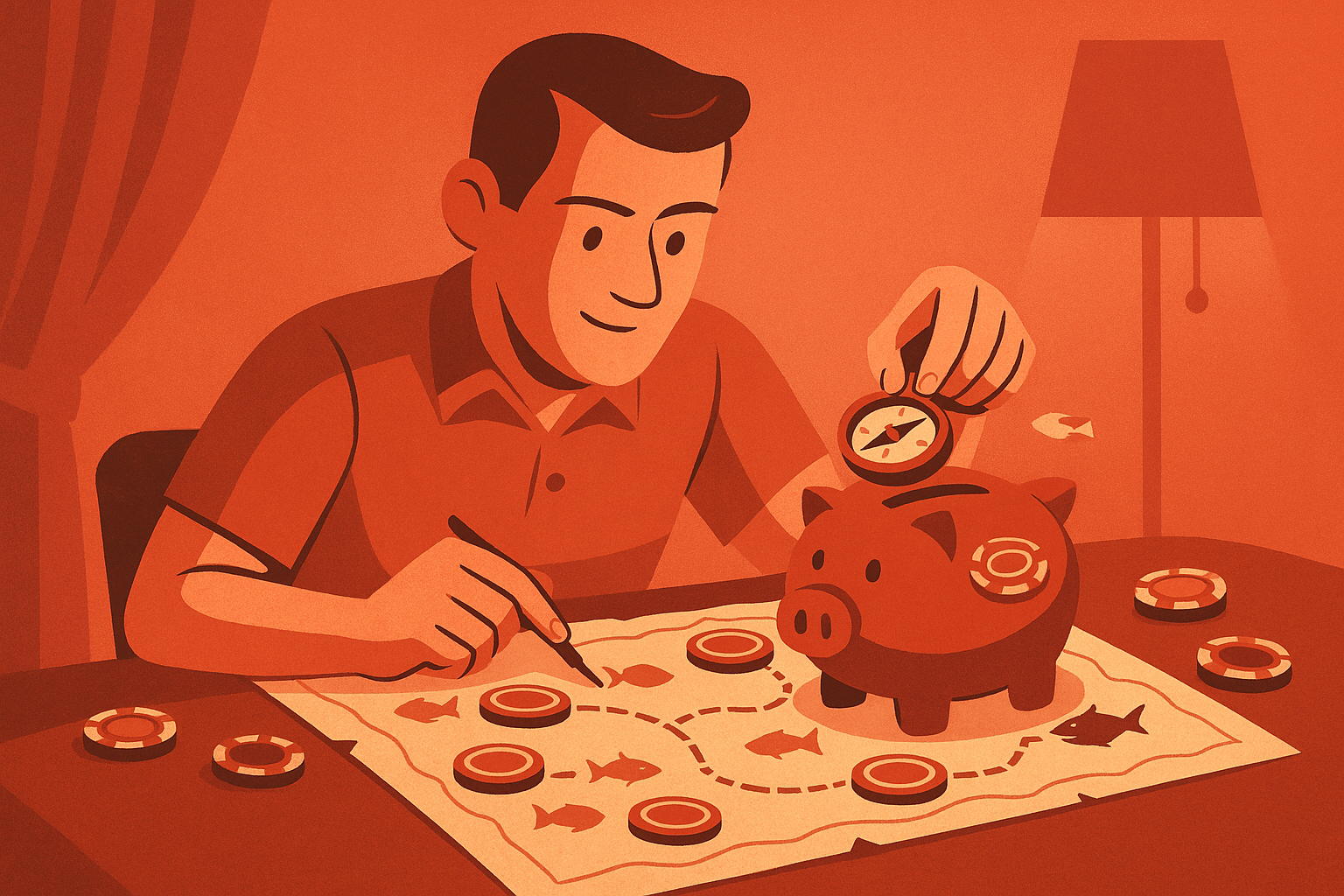
The Hidden Tax of Poker: Understanding Rake in Cash Games
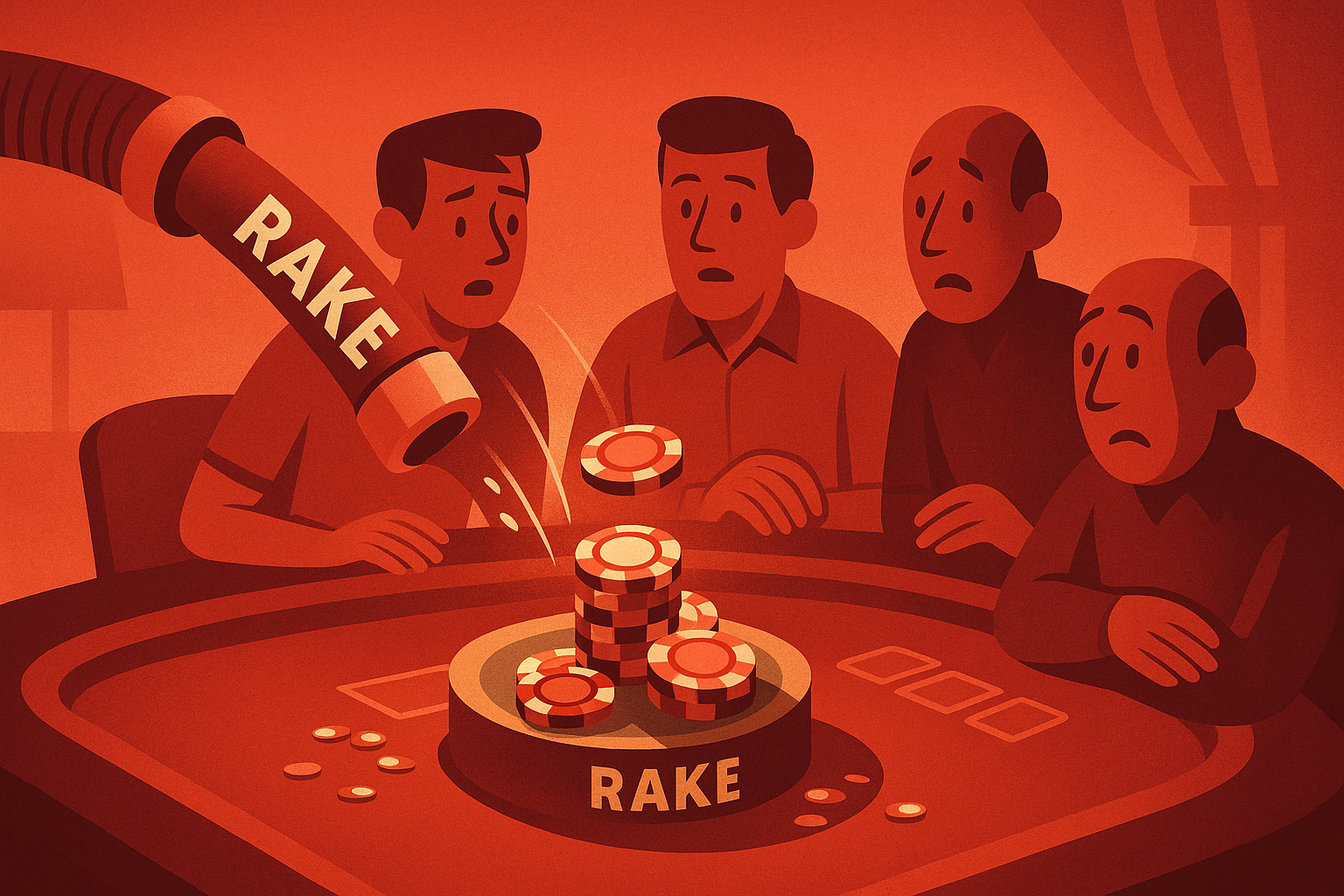
Every poker player knows about bad beats. But there's another opponent at the table you'll never see holding cards—the rake. It doesn't bluff, tilt, or make mistakes. It simply takes its share, hand after hand, and the only way to beat it is to understand how it works.
What Rake Is and How It's Taken
In a cash game, the rake is the house's commission—a small fee collected from most pots as the price for hosting the game. Typically, it's a percentage of the pot, up to a maximum amount called the cap.
For example, a cardroom might take 5% from each pot, capped at $5. If the pot reaches $100, the rake stops at that $5 limit; if it's only $20, the rake is $1. The percentage ensures the house earns proportionally from smaller pots, while the cap prevents it from becoming absurd on large ones.
Many live rooms and online sites also use a rule called "No Flop, No Drop." It means that if the hand ends before the flop—say, everyone folds to a preflop raise—no rake is taken at all. This rule subtly changes incentives: preflop steals and isolation raises become slightly more valuable because they escape the tax entirely.
However, not every platform plays by the same rules. For instance, GG Poker has its own system where the rake can still apply even if no flop is seen, particularly in three-bet or four-bet pots. The idea is to capture revenue from hands that already built significant preflop action. This makes GG's structure more punishing for aggressive players—especially in short-handed games where preflop re-raises are frequent. Understanding these structural differences can literally be the difference between a winning and losing player over time.
Why Rake Matters More Than You Think
Rake might sound small, but over thousands of hands, it's massive. Think of it as a constant drag on your win rate. If you're winning five big blinds per hundred hands in theory, but the rake costs you six, you're not a small loser—you're a long-term customer.
The effect is especially brutal at lower stakes, where pots are smaller but rake percentages remain high. A capped rake of $1 in a $10 pot is 10% of the action gone before cards even hit the muck. That means at micro-stakes, you need to win by a lot just to stay afloat.
At higher stakes, caps grow but represent a smaller fraction of the pot, making the structure more forgiving. This is one reason why small-stakes grinders obsess over rake—it's often tougher to beat than the players themselves.
How Rake Shapes Strategy
Rake doesn't just affect your win rate; it changes how optimal poker should be played.
Since the rake is taken mostly from pots that see a flop, it encourages a style that wins pots either preflop or decisively postflop. In practice, this means fewer speculative calls and more clean aggression. Calling wide out of position just to "see a flop" becomes far less profitable once the house tax is included.
That's why good players at low stakes often tighten up their blind defenses and fold marginal hands that might look fine on paper. Each time you enter a pot without clear value, you're paying rake to chase thin edges. Conversely, value hands gain importance—because every time you play a big pot and win, you dilute the impact of rake as a percentage of your profit.
Multiway pots are another trap. When several players limp and see a cheap flop, the rake takes the same maximum amount—but the pot rarely grows large enough to justify it. Over time, this structure favors a style built on raising preflop and isolating weaker opponents, not splashing around in rake-heavy limped pots.
The Difference Between Live and Online
Live and online cash games handle rake differently, but both demand awareness.
In live rooms, rake is often higher in absolute dollars. You'll see 10% up to $6 caps, plus occasional jackpot drops or promotional fees. Some mid- to high-stakes tables use time collection instead—a fixed charge per player every half-hour, regardless of pot size. That model reduces the penalty for tight play and benefits players who see fewer flops.
Online, rake is structured by stake level, usually between 3–5% with smaller caps. But micro-stakes games can feel much harsher in practice, since a $1 cap represents a huge chunk of a $20 pot. The cheaper the blinds, the more the rake bites.
Some rooms—again, GG Poker being a notable one—also rake three-bet or higher preflop pots, which means even strong, aggressive regulars need to factor in that tax when designing their strategy. What's profitable on one platform may be breakeven on another simply because of how the rake is calculated.
Choosing the Right Game
Smart bankroll management begins with smart game selection, and rake is a big part of that. Two games can look identical—same blinds, same players—but different rake structures can turn one into a goldmine and the other into a slow leak.
Look at both the percentage and the cap, and ask how many pots typically reach that cap. A low cap favors large, open pots; a high cap punishes small, multiway ones. Whenever possible, play in rooms or online sites that reward preflop initiative and let you build bigger pots without being taxed too heavily.
In other words: if you're going to pay the rake, make sure you're paying it on pots that matter.
The Takeaway: Learn the Game Behind the Game
Poker is hard enough without giving away edges you don't have to. Rake is invisible but relentless—it taxes uncertainty and punishes hesitation. By tightening up your loose calls, building pots with value, and favoring structures with fairer caps, you give your bankroll a real chance to grow.
If you want to see just how much rake structure impacts strategy, visit RiverNuts.io, where you can browse through various low- and mid-stakes NL cash rake models and see how different limits and caps influence optimal opening ranges.
Because once you understand how the house gets paid, you'll start playing like someone who plans to keep the rest.
Ready to Minimize Rake and Maximize Profit?
Get access to rake-adjusted strategies, game selection tools, and expert guidance to help you beat the house tax and increase your win rate. Join RiverNuts today.
Join Beta Now