Why the Blinds Are the Beating Heart of Poker
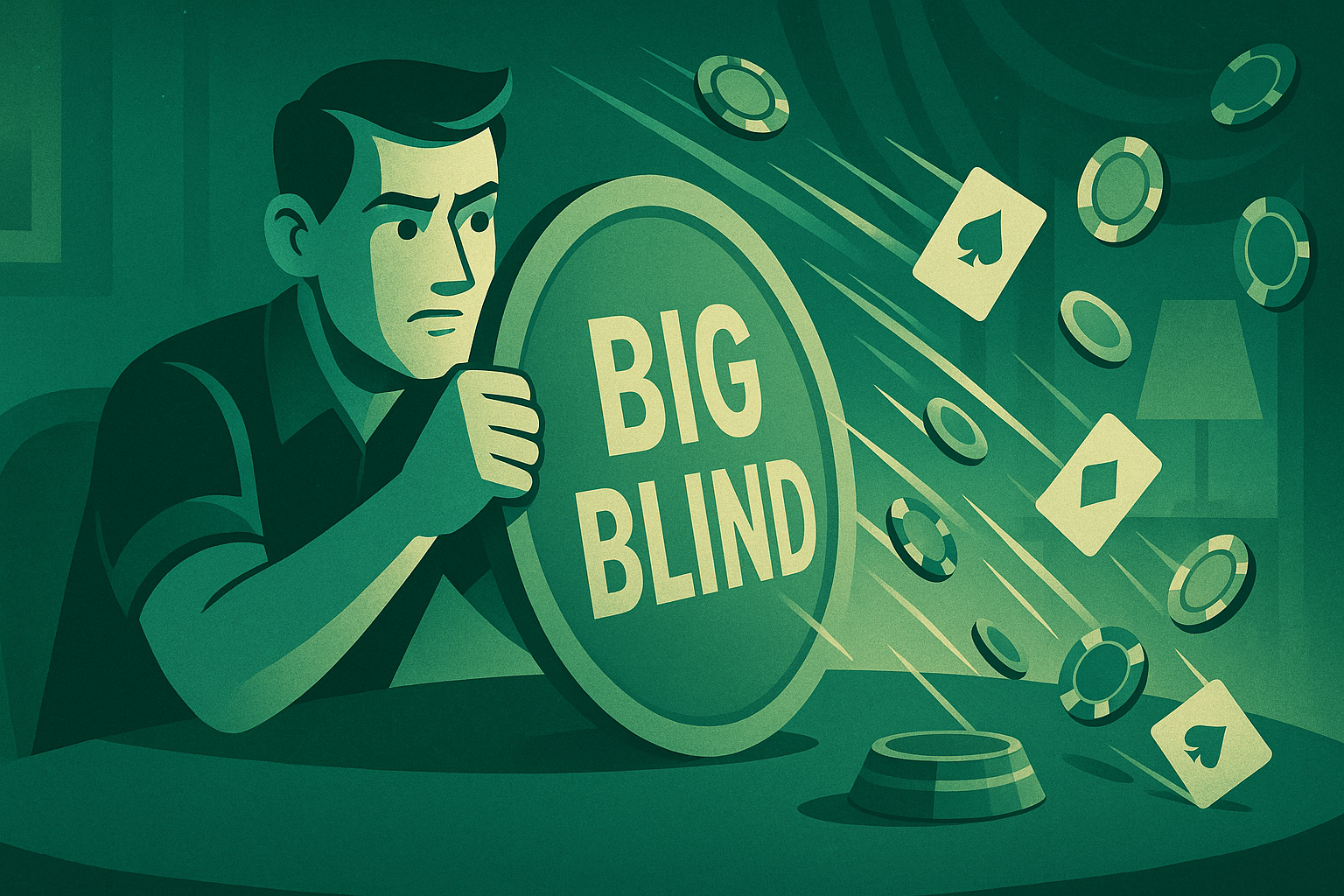
If poker were a living organism, the blinds would be its heartbeat—steady, constant, and vital. Without them, the game would stop flowing. Every orbit, two players are forced to put money into the pot before the cards are even dealt: the small blind and the big blind. It's a simple mechanic, but it's what gives poker its pulse.
Imagine a world without blinds. If no one had to post anything before the deal, what would happen? The optimal play—at least in game theory terms—would be for everyone to fold every hand except pocket aces. There'd be no reason to risk a chip until you had the stone nuts. Every hand would end before it began. No bluffs, no raises, no action. Blinds fix that problem elegantly: they force participation. Someone has already "paid to see a flop," and someone else now has an incentive to attack that money. That dynamic—risk versus opportunity—is the foundation of poker itself.
The Hidden Tax That Shapes Every Hand
The blinds are a silent tax on your stack. Whether you like it or not, you'll lose chips every orbit just by existing at the table. That means every player must eventually fight back. You can't just wait for premium hands forever, because the blinds will drain you dry.
This is why positional awareness exists. When the dealer button moves, so does the obligation to post. Each position's strategy is shaped around those two forced bets sitting out there, ready to be stolen. When you're in late position, you can attack the blinds more often, especially if the players posting them are tight or passive. Conversely, when you're the one paying them, you're in the hot seat—you'll be playing the worst positions on the board and often facing raises.
Defending the Blinds: The Art of Not Giving Away Chips
Defending your blinds isn't just about pride—it's math and survival. You've already put money in, so you're often getting discounted odds to call a raise. For example, if the big blind is $2 and someone raises to $6, you're only calling $4 into a pot that will be $9. Those pot odds mean you don't have to win all that often to break even. But there's a catch: being out of position makes realizing that equity tricky.
Good players balance this by defending smartly, not blindly. They tighten up against early-position opens (stronger ranges) and loosen up against late-position steals (weaker ranges). Suited connectors, broadways, and pairs are hands that can still perform well postflop because they realize their equity efficiently. Trash hands, even if they're cheap to call, tend to bleed money over time.
Small Blind vs. Big Blind: Same Tax, Different Jobs
Though both are "blinds," their situations differ dramatically. The small blind acts first postflop, putting it in one of poker's toughest spots. Many players simply play tighter here—folding more, raising more selectively, and trying to take the initiative with 3-bets rather than limp along.
The big blind, on the other hand, closes the preflop action and gets the best pot odds. That's why big blind defense is such an important concept. You can't fold everything or opponents will steal from you relentlessly. But you also can't call every raise just because you're "already in." The key lies in finding the middle ground: defend enough to make steals unprofitable, but not so wide that you end up playing garbage hands out of position.
Stealing, Pressure, and the Tug-of-War
Every poker hand begins with this little tug-of-war over the blinds. When you raise preflop, you're trying to pick up those forced bets uncontested. When you're in the blinds, you're deciding whether to let them go or make a stand. It's a perpetual game of cat and mouse.
This tension fuels poker's strategic depth. If opponents never fought back, stealing blinds would print infinite profit. But if defenders never folded, steals would become unprofitable. Somewhere in between lies equilibrium—a mix of aggression and defense that keeps both sides honest.
Why Blind Play Defines Winners and Losers
In the long run, your results from the blinds tell the truth about your game. Every winning player loses money there—it's inevitable—but the best players lose less. They manage that leak through selective defense, intelligent 3-betting, and strong postflop discipline. Average players lose far more than they need to, usually from calling too wide or playing passively out of position.
In a game where every small edge compounds, saving one big blind per hundred hands adds up to real profit. The blinds are where skill quietly separates the solid from the struggling.
The Final Word
Blinds are more than just forced bets—they're the heartbeat that keeps poker alive. They drive the action, shape the strategy, and test your discipline. Understanding them is understanding why poker works at all.
Every time you post your blind, remember: you're not just paying a fee to play—you're stepping into the arena where position, math, and mindset collide. Master your blind play, and you'll start mastering the game itself.
If you want to know how to play from the blinds, sign up to Rivernuts for free.
Ready to Master Blind Play?
Learn optimal blind defense strategies and turn this losing position into your secret weapon with our comprehensive training platform.
Join Beta Now