Limping: The Silent Tell of Weakness — and How to Punish It
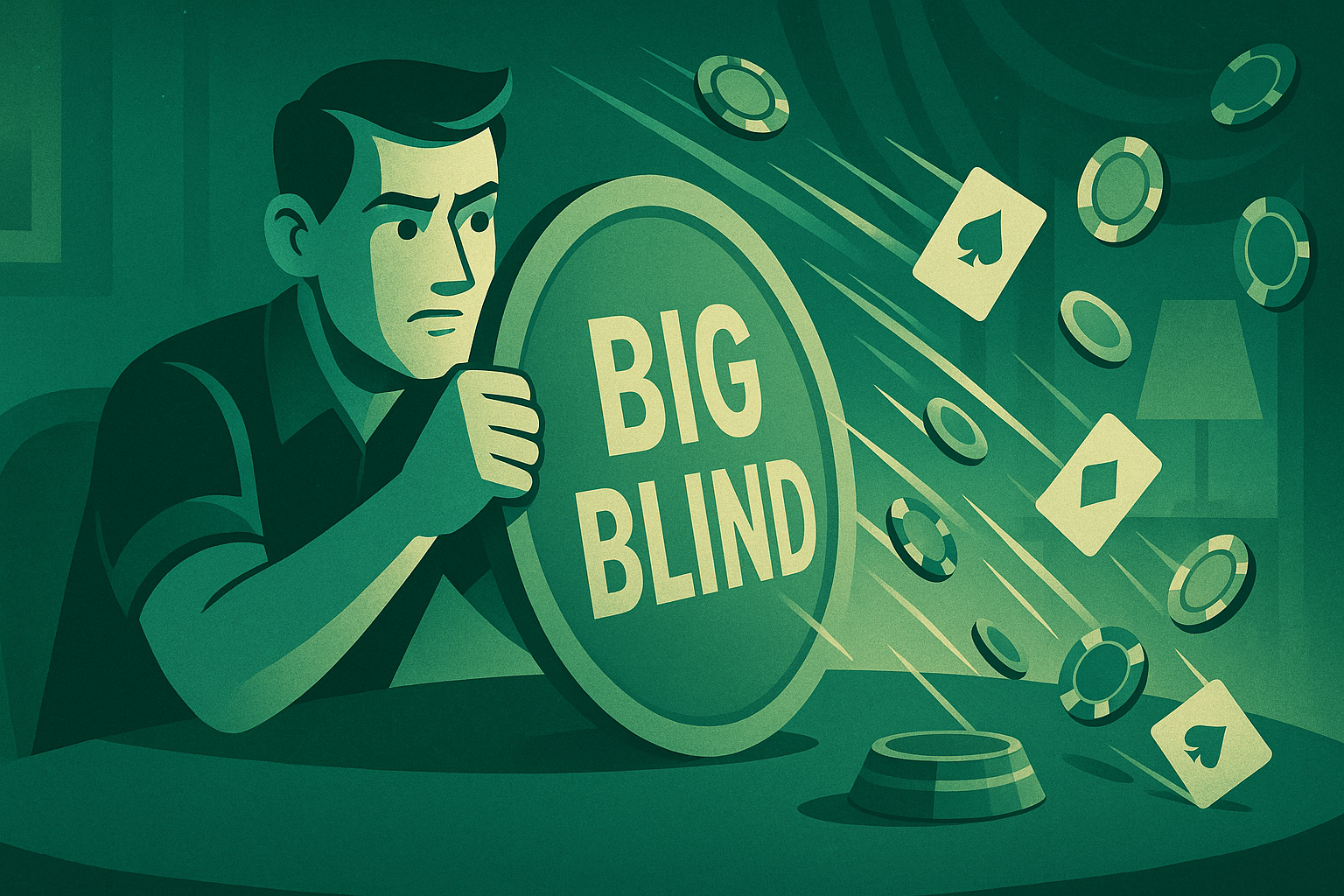
If you've played even a few sessions of cash game poker, you've seen it happen. The table folds around, a player casually tosses in a single big blind, and the dealer moves on as if nothing happened. That's a limp—entering the pot by calling the big blind instead of raising.
At first glance, it looks harmless. But in modern No-Limit Hold'em, limping is often the biggest tell of a weak player. It's passive, it gives up initiative, and it reveals uncertainty. And when you spot it, it's your cue to attack.
What Limping Really Says
A player who limps is saying one of two things: "I'm scared to raise" or "I'm trying something sneaky." Nine times out of ten, it's the first one. Recreational players limp because they want to "see a flop cheap." They don't want to commit to a big pot, they just want to get lucky.
That's why most winning players love seeing limps—it's free information. It's a flag that says this player is not confident about hand strength or range construction.
For that reason, you want to sit to the left of a limper whenever possible. Having position on them means you act after they do, and you can raise their limp repeatedly to pick up small, low-risk pots or build big ones with your strong hands.
But not all limps are bad. There are rare times when limping can make sense.
When Limping Can Be Justified
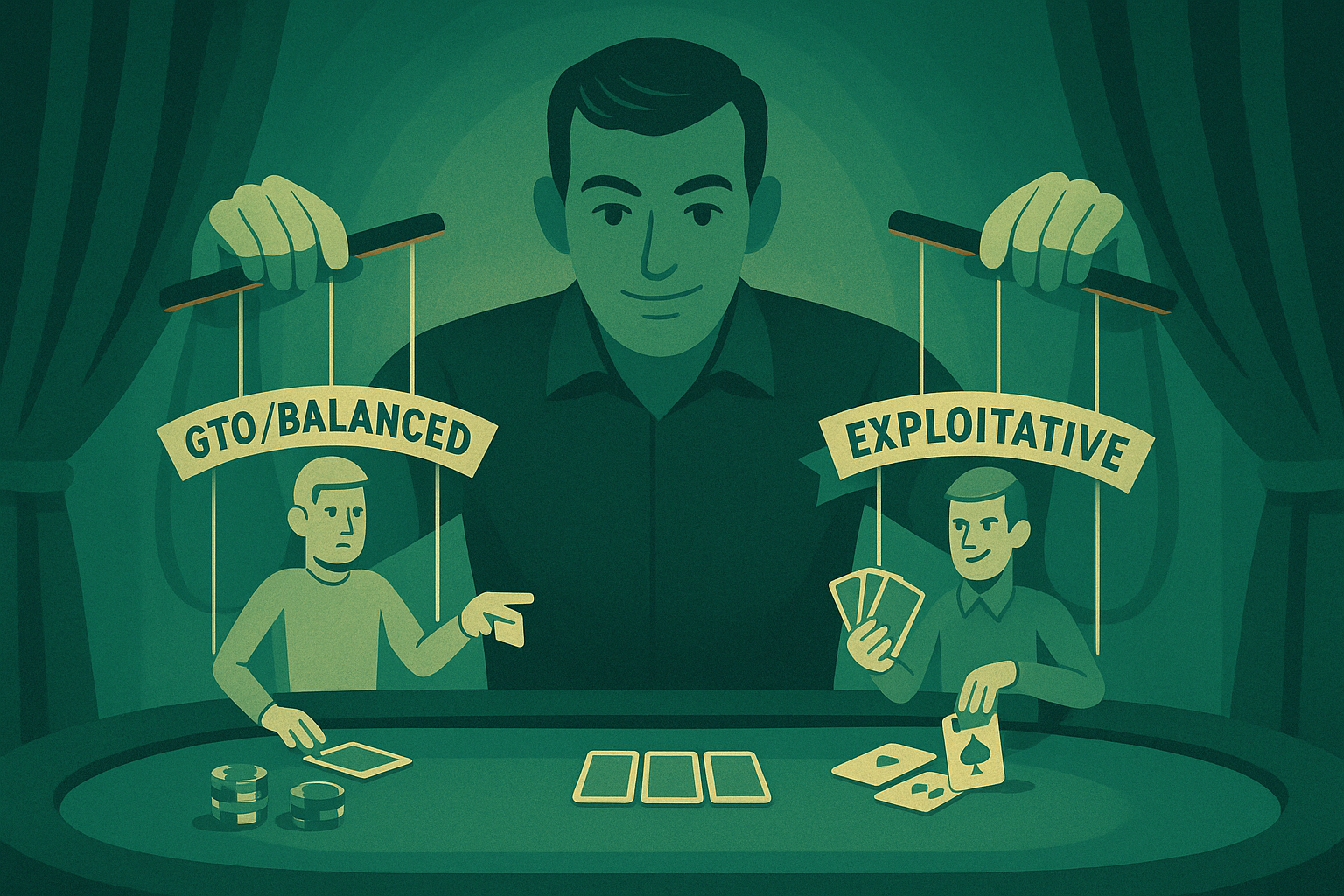
Let's be fair—there are some contexts where limping isn't pure weakness. A few experienced players develop balanced limping ranges—meaning they limp both hands they plan to call raises with and others they intend to re-raise (the so-called limp-raise).
That said, it's difficult to execute well, and in most rake-heavy games, it's not recommended. Still, there are a couple of situations where limping can be strategically valid:
- Exploiting aggression: Suppose you have a hyper-aggressive player on your left—someone who raises nearly every limp and then can't fold to a 3-bet. Limping with your strongest hands and then re-raising them ("limp-raising") can be a great exploit. You let them hang themselves.
- Small blind vs. big blind: Solver outputs show that in small blind vs. big blind spots, especially deep-stacked, a mixed limp strategy can sometimes perform well. The logic is that you control pot size out of position while keeping your range wide. But in practical, rake-heavy environments, this remains a fringe tactic—a tool for advanced players, not a default strategy.
For the most part, though, open-limping first into the pot is a losing play. You're announcing weakness before the cards are even dealt on the flop. And that's why your job is to punish it.
How to Punish the Limpers
The moment someone limps, the game becomes simple. You're now the one with initiative, information, and a chance to win a pot uncontested. Your response should be clear: raise them with a linear range—your strongest hands going down the hierarchy, without bluff-heavy junk.
In general:
- In position, raise to about 4x the big blind.
- Out of position, size up—go around 5–6x to deny equity and discourage overcalls.
Your isolation range will typically be around 25–30% of hands, roughly equivalent to a standard cutoff opening range. Think broadways, decent aces, strong suited connectors, and pocket pairs—hands that play well against the wide, passive range of a limper.
The goal isn't to blow the pot out of proportion with bluffs. It's to play bigger pots against weaker players with better hands and position.
When you raise, expect many limpers to call—you'll go postflop often. That's fine. Limp-call ranges are wide and soft, full of dominated hands and weak top pairs. Focus on value-betting cleanly, keeping bluffs modest, and extracting thin value when they can't fold middle pair. That's the essence of punishing limpers: discipline, not ego.
When the Limp-Raise Appears
Every now and then, your simple plan collides with something unexpected—a limper suddenly re-raises. Welcome to the limp-raise.
For most players, especially in low to mid-stakes games, a limp-raise is the loudest alarm bell in poker. It almost always means premium hands: aces, kings, queens, and occasionally ace-king. Rarely anything else.
When you see it, adjust immediately. Don't get curious, don't take it personally. Just overfold. The exploit is to respect the strength until proven otherwise. If you start calling these re-raises light, you're feeding their trap exactly as intended.
And yes, sometimes someone will bluff-limp-raise and show you 7♣5♣, but that's the price of discipline. Over time, folding too much in these spots prints money against a population that limp-raises only the very top of the deck.
The Final Word
Limping is one of those old-school habits that never quite dies. For many players, it's comfort—an illusion of safety before the flop. For you, it's opportunity.
Each limp is a small leak waiting to be punished, a moment where you can assert control and drag the pot your way. Raise them with purpose. Punish the passivity. Respect the rare trap, but don't fear it.
And if you want to learn more about how to exploit weaker players for maximum EV, head over to RiverNuts.io, where you'll find data-driven answers straight from our MDA database—the patterns, frequencies, and leaks that turn hesitation into profit.
Because in poker, the first mistake often happens before the flop. You just have to be the one ready to capitalize on it.
Ready to Turn Passive Players into Profit?
Get access to real player data, exploit strategies, and population tendencies to help you punish limpers and maximize your edge. Join RiverNuts and start capitalizing on weakness.
Join Beta Now